Some stones announce themselves loudly. Blue agate is not one of them. It earns attention gradually — through the softness of its colour, the depth of its banding, and the way it shifts in different light. Pale sky blue in one moment, deeper and more complex the next. It is the kind of stone that rewards patience, and that tends to be the kind of stone that people hold onto for a long time.
At Anjili Stones Crafts, we work with a wide range of natural materials, and blue agate occupies a special place among them. We are an established agate slab manufacturer India-based, with years of experience in sourcing raw material, processing it carefully, and turning it into products that reflect the stone’s natural character rather than overworking it. This piece is our attempt to share what we know about blue agate — where it comes from, what makes it worth choosing, and how to use it well.
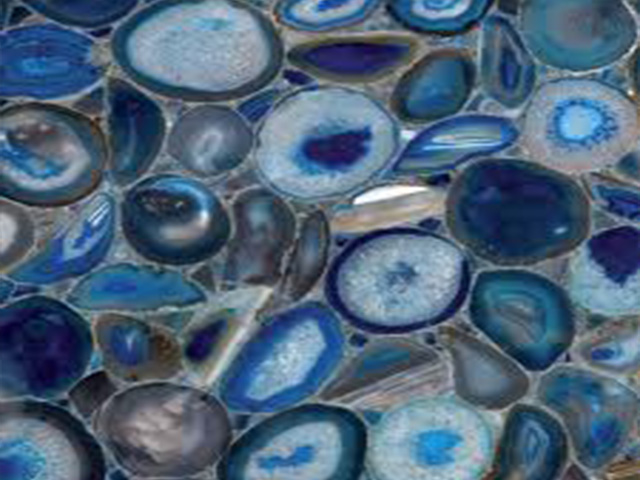
The blue colouration in agate comes from a combination of factors: trace mineral inclusions, the way silica layers interact with light, and in many commercial specimens, a carefully applied dyeing process that enhances the stone’s natural colour. Naturally blue agate does exist — certain deposits in Botswana, Namibia, and parts of South America produce agate with genuinely blue-grey tones — but the vivid, consistent blues that most buyers are looking for are typically achieved through treatment.
that most buyers are looking for are typically achieved through treatment.
This is entirely standard in the industry, and it is not something to be concerned about. Treated blue agate retains all the physical properties of natural agate — its hardness, its workability, its durability. The dye penetrates the stone’s naturally porous structure and remains stable over time when the stone is cared for properly. At Anjili Stones Crafts, we are transparent about treatment status because we think that is simply the right way to do business.
“Crafted with Passion, Shaped by Nature.”
Copyright © Anjili Stones Crafts | All rights reserved.
WhatsApp us