Some stones catch the light in ways that require an explanation. Aventurine is one of them. Hold a piece at the right angle and the surface seems to glitter from within — not the sharp sparkle of a faceted gemstone, but something softer and more diffuse, like sunlight scattered across water. This optical effect has its own name — aventurescence — and understanding what produces it goes a long way toward understanding what makes this stone genuinely interesting to work with.
At Anjili Stones Crafts, aventurine is a material we work with across multiple colour varieties and product forms. Its combination of distinctive optical character, good workability, and availability in a meaningful range of colours makes it one of the more versatile materials in our catalogue.
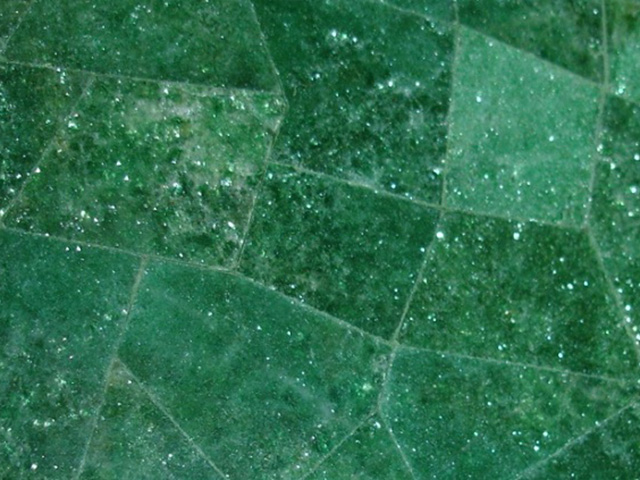
Aventurine is a variety of quartz — specifically a granular, microcrystalline quartz that contains small platelets of reflective minerals embedded within its matrix. These platelets are typically fuchsite (a chrome-bearing muscovite mica) in the green variety, hematite or goethite in red-brown specimens, and other mica minerals in blue, yellow, or orange varieties. It is these platelets that produce the aventurescence — the metallic, shimmering glitter visible across the stone’s surface in good light.
Green aventurine is by far the most common and widely available variety. The green colour comes from the fuchsite mica inclusions themselves — not from a separate colouring mineral — so the colour and the shimmer are produced by the same element within the stone’s structure. This is one of the things that gives the stone its visual coherence: the optical effect and the colour are inseparable, both arising from a single geological cause.
It is worth distinguishing aventurine from goldstone — a manufactured glass product made with copper or chromium inclusions that produces a similar visual effect. Goldstone is not a natural stone; it is a type of glass, and the two materials are easy to tell apart on closer inspection. Natural specimens have a granular, slightly imperfect surface at the microscopic level that glass does not replicate, and the shimmering effect in this stone is softer and less uniform than in goldstone.
Green aventurine — the most common variety — ranges from pale, soft sage green through to a deeper, more saturated forest green. The intensity of the green is related to the concentration of fuchsite mica, and the best material has an even, pleasing green tone with a consistent, well-distributed shimmer. Lower quality green aventurine can appear pale, grey-green, or lacking in significant aventurescence.
Red and brown varieties get their colour from hematite or goethite inclusions. These warm-toned specimens have a coppery, metallic shimmer quite different from the softer green variety.
Blue and grey varieties are less common and produced by dumortierite or other inclusions that create cooler, more subtle colour tones. These varieties are generally less available commercially but appealing in their own right.
Peach and yellow specimens round out the colour family, each produced by different minor mineral inclusions within the quartz matrix.
“Crafted with Passion, Shaped by Nature.”
Copyright © Anjili Stones Crafts | All rights reserved.
WhatsApp us