In a world of stones that compete for attention — vivid greens, deep purples, saturated blues — grey agate does something different. It steps back. It lets the eye settle. And then, once you look properly, it reveals a complexity that louder stones often lack: fine banding that shifts between warm and cool, translucency that changes with the angle of light, a surface that reads differently at noon than it does in lamplight.
Grey is not a colour that gets described as exciting very often. But in natural stone, grey is rarely just grey — and grey agate is a good example of why that matters. At Anjili Stones Crafts, it is one of the materials we find ourselves recommending to customers who want something that works quietly and consistently across many different contexts. This piece explains what grey agate is, where it comes from, and why it continues to earn a place in jewellery collections and interior spaces around the world.
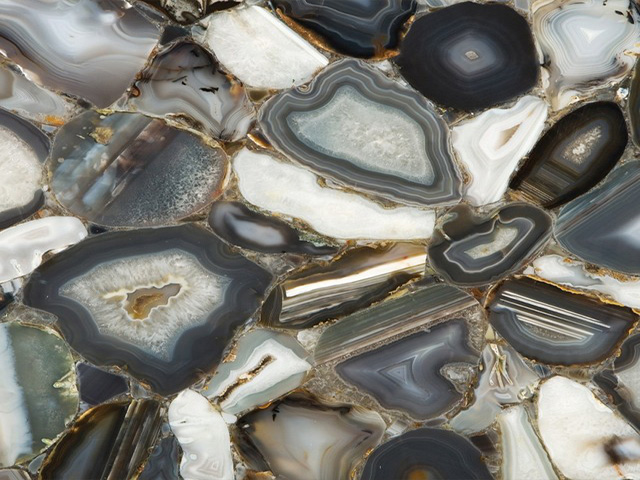
Grey agate is a variety of chalcedony — the microcrystalline quartz family that includes most of the world’s banded stones. Like all agates, it forms when silica-rich groundwater slowly deposits layers of chalcedony inside rock cavities over geological time. What gives grey agate its characteristic colour is the specific mineral chemistry of the groundwater during formation: lower concentrations of iron and other colouring agents, combined with inclusions of fine
particles that scatter light in ways that produce grey rather than white or coloured tones.
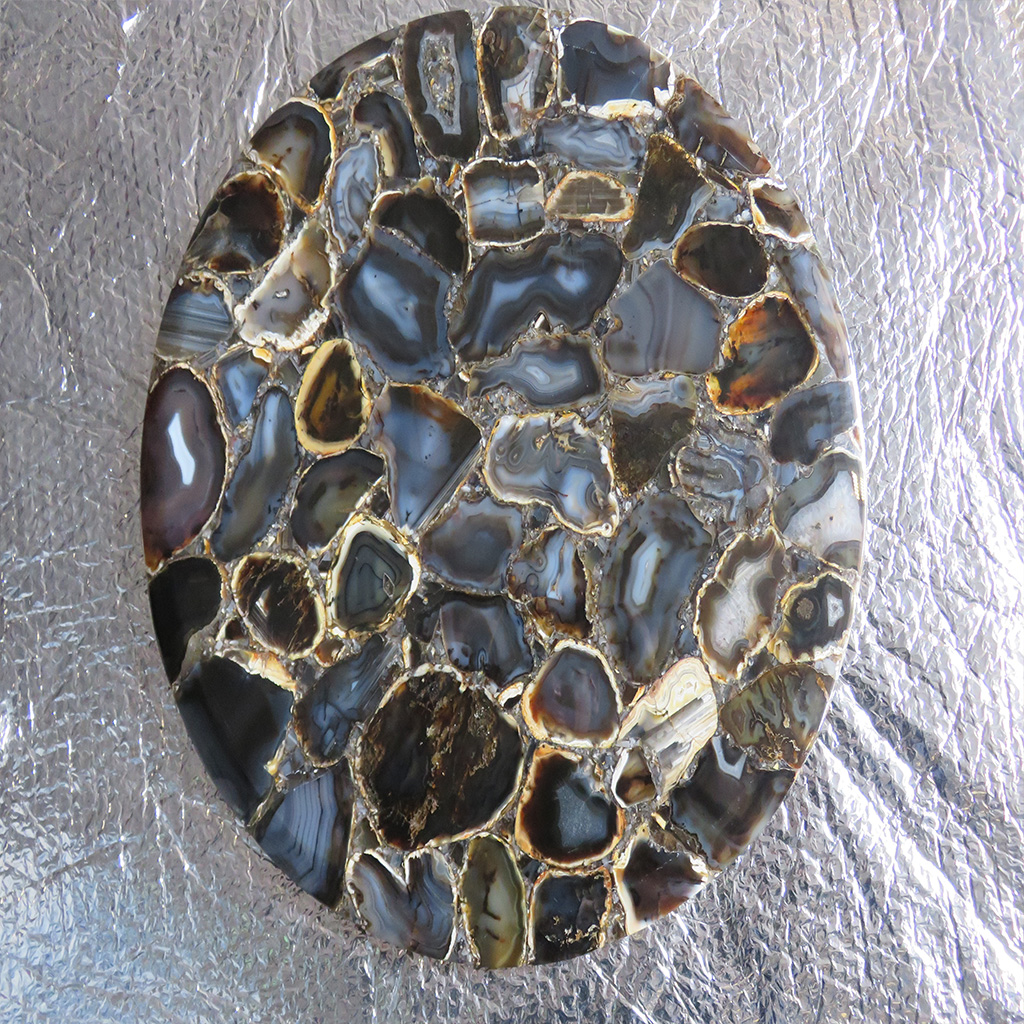
In practice, grey agate is rarely a single uniform grey. Most specimens show a range: pale silver-grey bands alternating with deeper charcoal layers, warm greige tones alongside cooler blue-grey, translucent areas that appear almost white against bands that are more solidly opaque. This internal variation is what makes it genuinely interesting to work with, and it is what separates a well-chosen piece of grey agate from something that merely looks neutral.
It is worth noting that grey agate is among the agate varieties most commonly found in its natural colour. While dyeing and treatment are standard practice across many agate types, grey agate’s muted, complex tones are genuinely difficult to replicate through treatment — so a high proportion of what is sold as grey agate has not been significantly altered from its natural state. This is one of the qualities that serious collectors and lapidary professionals tend to value about the stone. At Anjili Stones Crafts, we are as transparent as always about treatment status, but with grey agate, the answer is often simply: this is the stone as it came from the ground.
“Crafted with Passion, Shaped by Nature.”
Copyright © Anjili Stones Crafts | All rights reserved.
WhatsApp us