Some materials work because they demand attention. Others work because they do not. White quartz belongs to the second category — a stone that earns its place through restraint, through the quality it brings to everything around it, and through a visual depth that reveals itself slowly rather than announcing itself immediately.
It is easy to underestimate white quartz. The name does not hint at complexity. The colour sounds simple. But spend time with a well-chosen piece — a polished sphere sitting on a shelf, a slab surface catching morning light, a strand of beads worn against the skin — and something becomes clear. The stone is not just white. It is translucent in places and opaque in others. It carries internal structures — veining, inclusions, crystalline pockets — that give it a depth no manufactured white surface possesses. It moves in light rather than sitting still under it.
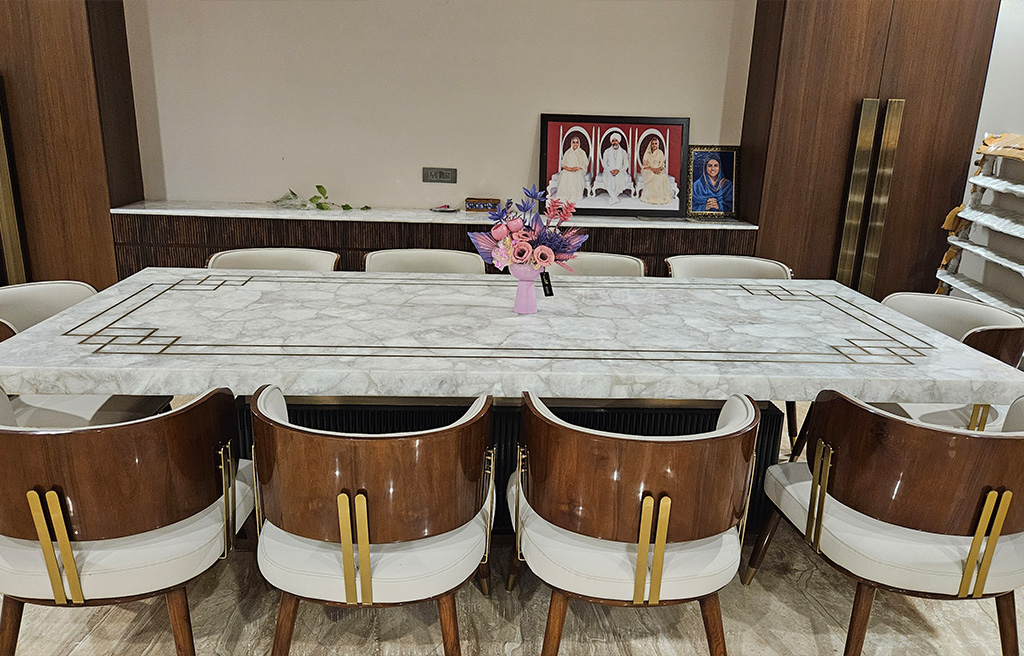
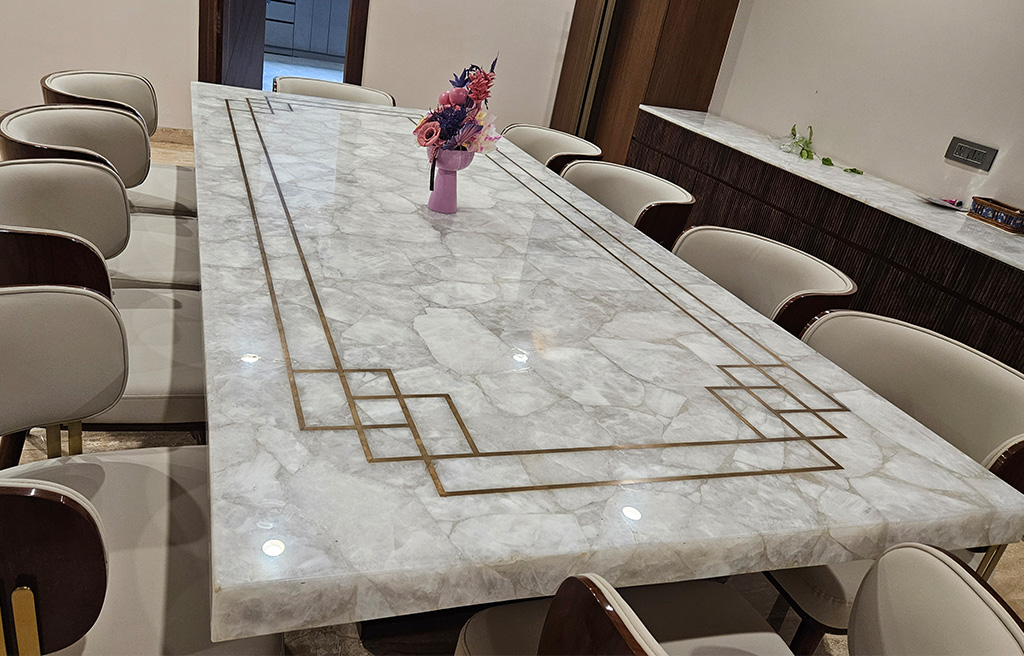
At Anjili Stones Crafts, white quartz is one of the materials we return to consistently, both because demand for it remains strong across a wide range of applications and because, on its own terms, it is genuinely interesting to work with. This piece explains what white quartz is, what makes good material worth choosing, and how it performs across the contexts where it is most commonly used.
Quartz is one of the most abundant minerals on Earth, making up a significant portion of the continental crust. In its pure form, quartz is silicon dioxide — a remarkably simple chemical composition that nonetheless produces one of the most varied families of minerals in the natural world. The variation comes not from the composition but from the conditions of formation: temperature, pressure, the presence of trace minerals, the rate of crystallisation, and the physical environment all influence what kind of quartz results.
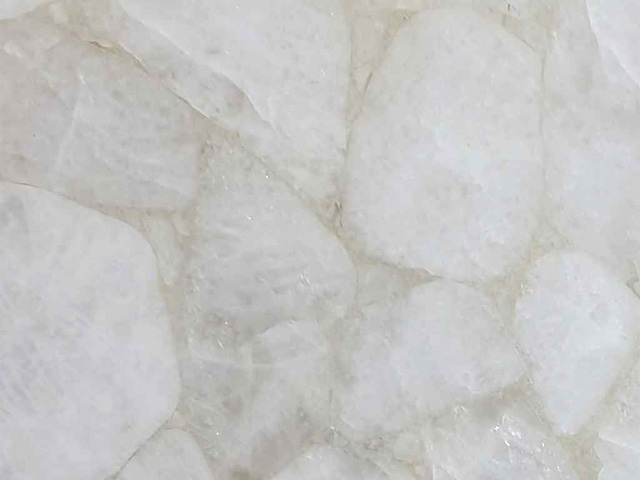
White quartz refers specifically to quartz that is white in colour, a result of light scattering through microscopic inclusions, fractures, or structural irregularities within the crystal lattice. In pure, structurally perfect quartz, light passes straight through and the stone appears clear — this is what produces the colourless, transparent rock crystal quartz that is also common and well known. When the crystal structure contains imperfections — tiny fluid inclusions, gas bubbles, fine particles of other minerals — light is scattered rather than transmitted, and the stone appears white, milky, or opaque.
This distinction is important. White quartz is not simply clear quartz with a colour applied to it. The whiteness is a structural quality, a result of the stone’s internal character, and it exists in degrees. Milky white quartz — sometimes called milk quartz or snow quartz — has a soft, translucent quality that allows some light to pass through while scattering most of it. Opaque white quartz allows very little light transmission and presents as a dense, clean white. In practice, many specimens fall somewhere between these extremes, showing variation from translucent to opaque within a single piece.
It is also worth distinguishing natural white quartz from engineered quartz stone — a manufactured composite material made from quartz particles bound with resins and pigments. Engineered quartz is widely used in kitchen countertops and is a different product entirely. Natural white quartz, the material we work with at Anjili Stones Crafts, is quarried and cut from geological formations without the addition of synthetic binders or pigments. The two products share a mineral component but are otherwise quite different, and the depth, variation, and natural character of genuine white quartz cannot be replicated by a manufactured composite.
“Crafted with Passion, Shaped by Nature.”
Copyright © Anjili Stones Crafts | All rights reserved.
WhatsApp us