Blue is one of those colours that people respond to without quite being able to explain why. It carries associations of depth, of stillness, of something larger than the immediate — the sky, the sea, the distance. When that colour appears in a natural stone, it carries those associations into something you can hold, wear, or place in a room. Blue quartz does exactly this, and it does it with a subtlety and quiet complexity that more vivid blue gemstones sometimes sacrifice for the sake of intensity.
At Anjili Stones Crafts, blue quartz is a material we find consistently rewarding to work with. The colour range is broader than most people initially expect, the stone’s physical qualities make it practical across a wide range of applications, and the way individual pieces interact with light gives finished work a depth that photographs cannot fully capture. This piece is our attempt to share what we know about it honestly — where it comes from, what produces its colour, what to look for when choosing it, and how it performs across its many uses.
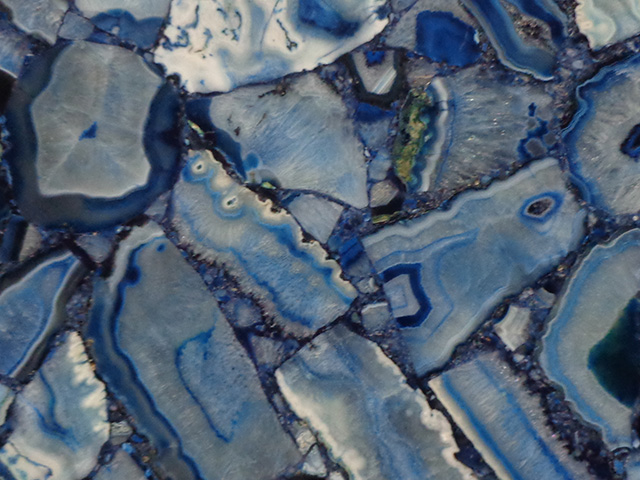
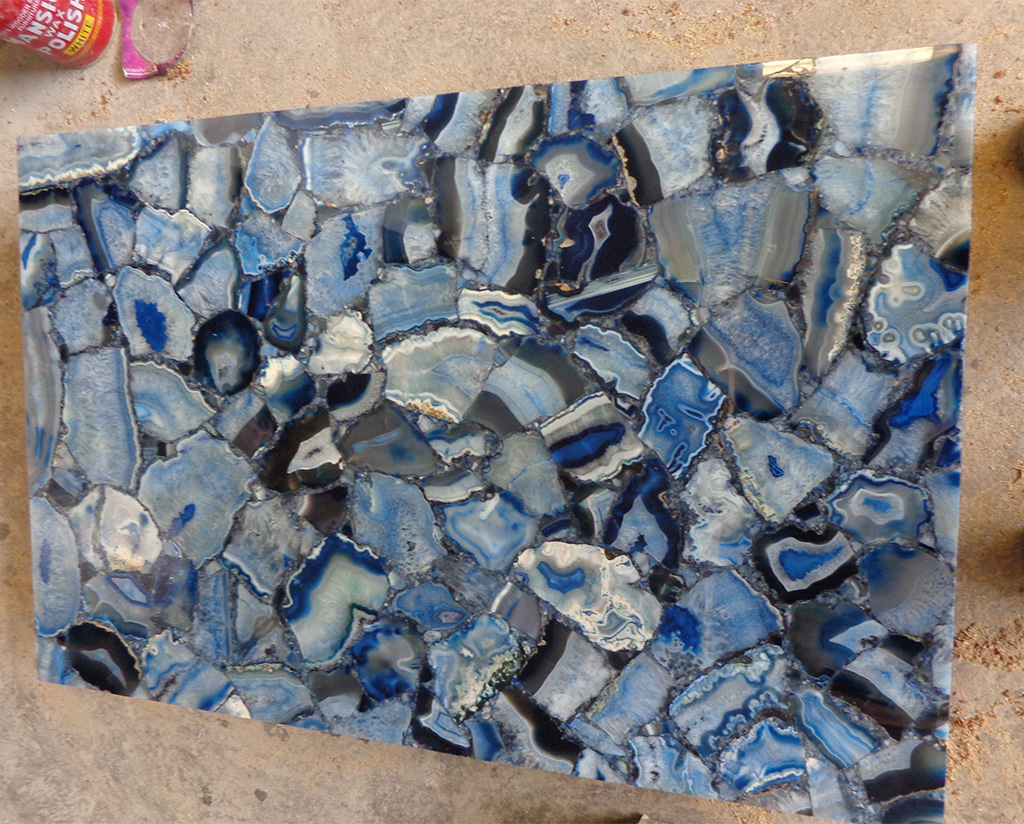
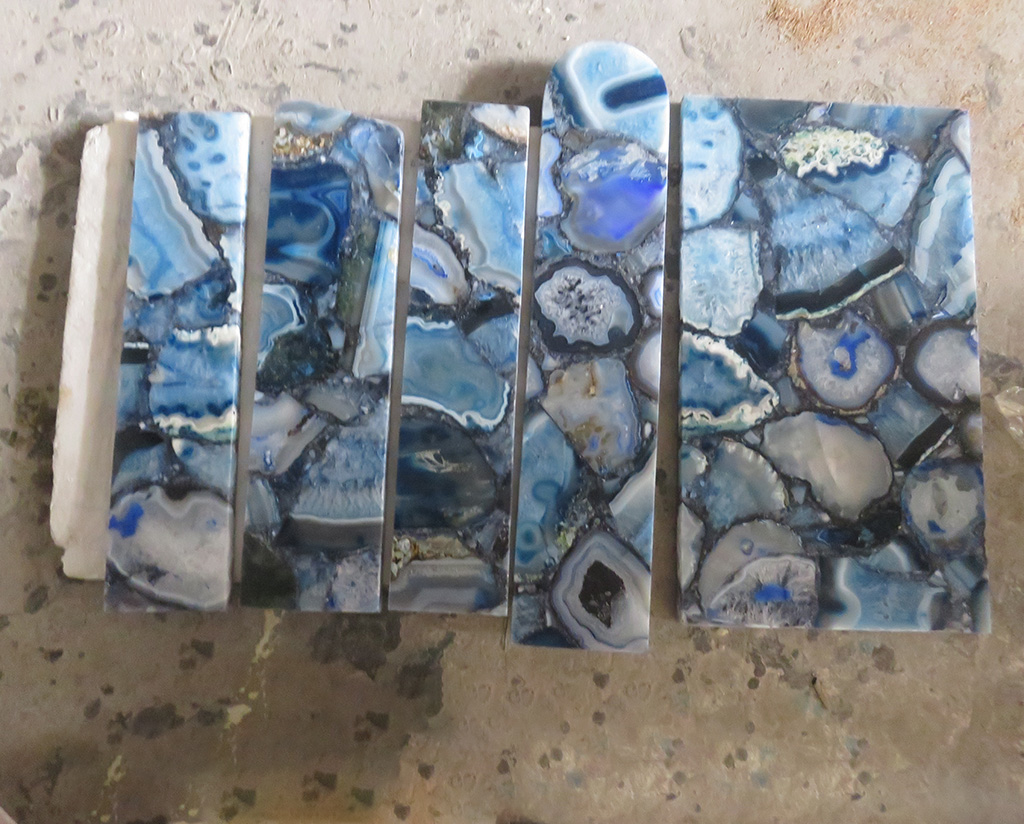
Blue quartz is a variety of quartz — the silicon dioxide mineral that is among the most abundant in the Earth’s crust — in which the normally colourless crystal structure appears blue. This blue colouration is not produced by a single mechanism. It arises in different ways in different geological settings, and understanding those mechanisms helps explain why blue quartz specimens from different sources can look so different from one another.
The most common source of natural blue colouration in quartz is the inclusion of tiny fibrous minerals within the crystal matrix. Fibrous inclusions of minerals such as tourmaline, rutile, or dumortierite scatter and reflect light within the quartz in ways that produce blue tones — a phenomenon similar in principle to what makes the sky appear blue. This is particularly well illustrated in dumortierite quartz, a variety in which dense inclusions of the blue mineral dumortierite give the quartz a strong, consistent blue colour that can be quite vivid.
A second mechanism is Rayleigh scattering — the same optical effect responsible for the blue sky. When very fine particles of other minerals are suspended within the quartz crystal, they scatter shorter wavelengths of light (the blue end of the spectrum) preferentially, producing a diffuse blue colour that is often soft and milky rather than saturated and clear.
In the commercial market, a significant proportion of blue quartz has been treated — either dyed or irradiated — to produce or enhance its blue colour. Irradiation of certain quartz varieties can produce blue tones that are stable over time; dyeing works through the stone’s natural porosity to introduce colour. At Anjili Stones Crafts, we are transparent about treatment status because it is information that matters for how you use and care for the stone, and because transparency is simply how good business should be conducted.
“Crafted with Passion, Shaped by Nature.”
Copyright © Anjili Stones Crafts | All rights reserved.
WhatsApp us