There is a particular quality to stones that wear dark colours well. Not the dense, light-absorbing darkness of black agate or obsidian, but something more nuanced — a darkness that still lets light through, that still shows depth and internal structure, that suggests both warmth and shadow at once. Smoky quartz has this quality more completely than almost any other stone. Its colour is not simply brown or grey. It is translucent, layered, and alive in the way that genuinely natural things tend to be.
At Anjili Stones Crafts, smoky quartz is among the stones we find most rewarding to source and finish. The range of colour within a single variety is surprisingly broad, the physical quality of the material is excellent, and the way individual pieces respond to different light conditions gives finished work a character that is hard to achieve with more uniformly coloured materials. This piece shares what we know about it honestly — what it is, where it comes from, what makes a good specimen worth choosing, and how it performs across a wide range of applications.
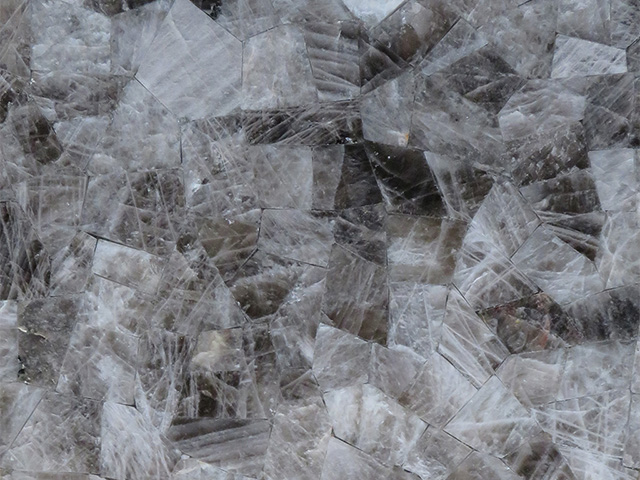
Smoky quartz is a variety of crystalline quartz — silicon dioxide in its macrocrystalline form — in which the normally colourless crystal appears in shades ranging from pale grey-brown through warm honey-brown to deep, almost black tones. Unlike many coloured gemstone varieties where the colour comes from chemical impurities introduced during formation, the colour of smoky quartz has a more unusual origin.
The smoky colouration results from natural irradiation. Trace amounts of aluminium are incorporated into the quartz crystal lattice during formation, substituting for silicon atoms. On their own, these aluminium impurities produce no visible colour. But when the stone is exposed to natural radiation from surrounding rocks — over the millions of years it spends in the ground — the radiation interacts with the aluminium-containing sites within the crystal structure, producing colour centres that absorb certain wavelengths of visible light. The light that is not absorbed passes through, and what reaches the eye is the characteristic warm, smoky brown to grey-brown colour that gives the stone its name.
This radiation-produced colour is what makes smoky quartz distinctive as a natural material. The colour is genuinely intrinsic to the crystal structure — not a surface coating, not an included mineral, not a treatment applied after the stone is formed. This is why smoky quartz, when heated, loses its colour (the heat disrupts the colour centres) and why artificially irradiating colourless quartz in a laboratory can produce similar smoky tones. Both natural and laboratory-irradiated material are available in the market. Natural colour is generally preferred by collectors and connoisseurs; irradiated material is entirely stable and suitable for all practical applications. At Anjili Stones Crafts, we are transparent about which we offer.
“Crafted with Passion, Shaped by Nature.”
Copyright © Anjili Stones Crafts | All rights reserved.
WhatsApp us